
China’s induction headlamp industry is moving beyond basic illumination. Buyers now request motion sensors, rechargeable batteries, adjustable beams, and visible branding. This is where Induction Headlamp Custom Logo sourcing becomes practical, but product claims still require careful verification.
Grand View Research estimates the global headlamp market will expand steadily through 2030, supported by outdoor recreation, industrial work, and emergency preparedness. Fortune Business Insights also identifies LED efficiency and rechargeable designs as important market drivers. These reports describe broad headlamp demand, not every Chinese supplier. That distinction matters.
Small details matter.
A workshop buyer may inspect sensor response with dusty gloves. A distributor may test logo clarity under blue-white LEDs. A safety manager may ask for battery protection, ingress resistance, and consistent charging performance. Reliable suppliers should provide samples, factory photographs, test records, and clear production tolerances. ISO 9001 systems can support process consistency, but certification alone cannot prove every model’s performance.
Photobiologist George C. Brainard, PhD, has stated, “Light is the most powerful synchronizer of the human circadian system.” His research concerns human light exposure, not branded headlamp purchasing. Still, it reminds buyers to examine beam color, glare, and real working conditions.
Customization is not only printing a logo.
It can involve mold changes, packaging artwork, sensor calibration, and minimum order quantities. Some supplier pages overstate battery capacity or detection distance. Buyers should challenge those figures with independent tests. This guide compares ten China-based suppliers through product capability, customization experience, quality evidence, communication, and export readiness. The ranking is useful, but not perfect. Supplier conditions change, and one sample cannot represent every shipment.
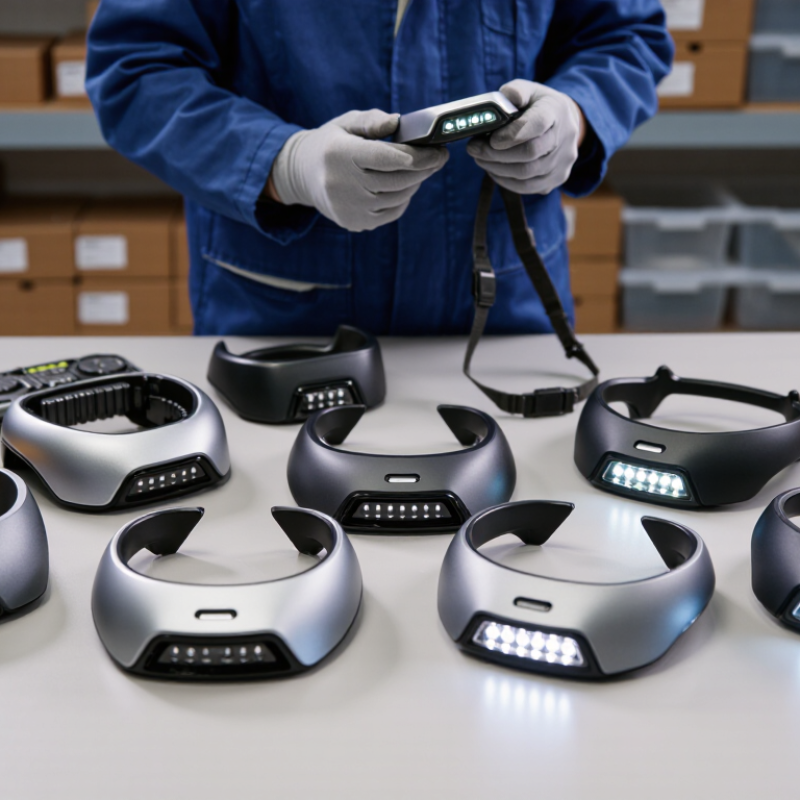
A reliable induction headlamp custom logo supplier does more than print a logo on plastic. They understand lighting performance, factory controls, and practical field use. Their team should explain beam distance, sensor response, battery capacity, charging behavior, and operating time clearly. Vague promises are warning signs.
Request a working sample before placing a large order. Test it with gloves, wet hands, dusty conditions, and repeated switching. Check whether the sensor responds quickly without turning on accidentally. Inspect the logo after cleaning and moderate friction. A dependable supplier shares material details, production tolerances, inspection records, and traceable batch information. They should also provide relevant testing documents for the intended market. A beautiful sample can still hide weak wiring or uneven assembly. I have learned that clear questions often reveal more than polished sales language.
Tips: Confirm the logo artwork, placement, color, and durability in writing. Ask for a pre-production sample. Keep one approved sample for comparison. Discuss packaging, spare parts, delivery timing, and quality remedies before production begins. Also, test real user comfort. A headlamp may be bright, yet uncomfortable after twenty minutes. Suppliers deserve careful evaluation too; one missed detail can become an expensive lesson.
Selecting China’s top induction headlamp suppliers requires more than comparing factory photos or low quotations. A reliable supplier should show real production experience with motion-sensor headlamps, custom logos, and rechargeable lighting systems. Request sample units before discussing large orders. Check sensor response, beam stability, battery performance, charging time, and comfort during extended use. A headlamp that activates beside a workbench may react differently outdoors.
Professional suppliers provide clear specifications and repeatable quality records. Ask for material details, production capacity, inspection procedures, and packaging samples. Logo customization should include proof approval, printing methods, color limits, and logo durability tests. Suppliers with documented quality control are easier to evaluate. However, paperwork alone is not enough. I have seen polished reports hide uneven charging ports and loose headbands. Physical inspection still matters.
Tips: Test several samples from different production batches. Measure activation distance in bright and dark conditions. Ask how rejected units are handled. Confirm communication speed during revisions. A supplier may promise flexible customization, yet struggle with small design changes. That weakness deserves attention. Also review product safety documentation and export requirements for the target market. The strongest partner combines responsive communication, practical engineering, stable output, and honest answers when a sample fails.
| Rank | Selection Dimension | Weight | Recommended Verification Benchmark | Evidence to Request | Why It Matters for Custom-Logo Headlamps |
|---|---|---|---|---|---|
| 1 | Product Safety and Compliance | 18% | Applicable CE, EMC, and electrical-safety requirements for the target market | Test reports, declarations of conformity, technical files, and product labels | Reduces regulatory, recall, and import risks when the buyer adds a private logo. |
| 2 | Quality Management System | 15% | A documented quality system, preferably certified to ISO 9001:2015 | Valid certificate, certification scope, audit history, and corrective-action records | Supports consistent assembly, inspection, traceability, and repeat production. |
| 3 | Induction-Sensor Performance | 12% | Stable hands-free activation, reliable sensing, and controlled false-trigger behavior | Activation test data, sample videos, environmental test records, and control logic details | The sensor is the defining feature of an induction headlamp and directly affects user experience. |
| 4 | Battery and Charging Safety | 12% | Battery protection, suitable charging control, and compliance with applicable transport rules | Battery specification, protection-circuit details, IEC 62133-2 records where applicable, and UN 38.3 documentation | Protects against overheating, overcharging, shipping restrictions, and premature battery failure. |
| 5 | Ingress Protection and Durability | 10% | A claimed IP rating tested under IEC 60529, matched to the intended application | IP test report, sealing design, drop-test method, and operating-temperature range | Outdoor, industrial, and sports users need protection from dust, rain, and daily impact. |
| 6 | Lighting Output and Runtime | 10% | Measured lumen output, beam pattern, operating modes, and runtime under defined conditions | Photometric data, runtime curves, LED specifications, and sample inspection results | Verified performance prevents misleading marketing claims and inconsistent private-label products. |
| 7 | Custom Logo Capability | 8% | Controlled logo placement on the housing, strap, packaging, or user documentation | Artwork guidelines, logo samples, color references, approval workflow, and packaging mock-ups | Ensures visual consistency and reduces artwork, color, and placement errors. |
| 8 | Materials and Chemical Compliance | 6% | Material declarations aligned with RoHS requirements and the destination market | RoHS test reports, supplier declarations, bill of materials, and restricted-substance records | Supports legal market access and responsible sourcing for electronic components. |
| 9 | Production and Inspection Control | 5% | Documented incoming, in-process, and final inspection procedures | Quality-control plan, inspection checklist, sample approval records, and defect-handling procedure | Maintains quality when the same model is produced repeatedly with customized branding. |
| 10 | Communication and After-Sales Support | 4% | Clear technical communication, warranty terms, spare-parts support, and complaint response | Written warranty policy, response procedure, replacement-part list, and escalation contacts | Reliable support reduces downtime and protects the buyer’s private-label reputation after shipment. |
| Total Evaluation Weight | 100% | Suppliers should be ranked only after document review, sample testing, and production-capability verification. | |||
Note: Compliance requirements depend on the destination market and product configuration. Certificates and test reports should be checked for validity, scope, model coverage, and issuing laboratory before supplier approval.
Leading induction headlamp suppliers now compete through product engineering, not only logo printing.
Their strongest models combine motion sensors, adjustable beam angles, rechargeable batteries, and lightweight ABS housings. The U.S. Department of Energy reports that modern solid-state lighting can exceed 100 lumens per watt.
This supports longer operating time in compact headlamps, although real performance depends on heat control and battery quality.
Customization usually begins with a digital logo file and a physical sample. Suppliers may offer laser engraving, silk screening, color-matched housings, custom straps, and retail packaging. Professional buyers should request measured lumen output, runtime charts, charging-cycle data, and IP ratings under IEC 60529. ANSI FL1 testing also helps clarify beam distance, impact resistance, and water performance. A supplier claiming “high brightness” without test conditions is not providing enough evidence. That gap deserves attention.
Tips:
Ask for a pre-production sample before approving a large order. Check the logo after repeated charging and cleaning. Confirm MOQ, mold charges, lead time, warranty terms, and battery certifications in writing. Many suppliers appear flexible at quotation stage, but customization becomes limited after tooling begins. This is where careful review matters.
When comparing China’s top ten induction headlamp custom logo suppliers, examine quality before accepting the lowest quotation. Check beam consistency, sensor response, battery capacity, charging cycles, and waterproof ratings. A reliable supplier should provide test reports, production samples, and clear inspection records. Ask whether the logo is laser engraved or printed, because each method affects durability and appearance.
Certifications also deserve close attention. Look for CE and RoHS documentation, plus ISO 9001 production controls where available. For rechargeable models, request relevant battery transport and safety test records. Compare prices using the same specifications, packaging, logo method, and warranty terms. A cheaper unit may use a weaker sensor or shorter-lasting battery. That difference becomes obvious during field testing. It is easy to overlook.
Tips: Request three samples before ordering. Test them in a dark warehouse, during movement, and after repeated charging. Compare the actual light output with the supplier’s claim. Also confirm the minimum order quantity, sample fees, mold charges, lead time, and replacement policy in writing. Some suppliers accept a small trial order but charge more for custom packaging. Others offer better pricing at 500 or 1,000 units, yet their quality control may vary between batches. A pre-shipment inspection is worthwhile, although it adds cost. Suppliers should explain every charge clearly, not hide it inside the unit price.
Choosing the best induction headlamp supplier starts with evidence, not attractive product photos. Request a working sample with your logo, packaging, beam pattern, motion sensor, and charging cable. Check whether the supplier can provide ISO 9001 records, battery test reports, and IEC 60529 ingress protection results. These documents reveal process maturity. They do not guarantee perfection.
Market research supports careful planning. Grand View Research projects continued growth in the global headlamp market through 2030, driven by outdoor work, safety, and hands-free lighting demand. More demand can mean faster production, but also overloaded factories. Ask about monthly capacity, current lead times, and quality-control staffing. A supplier offering a very low minimum order quantity may help startups, yet its customization control could be limited.
Inspect the logo method closely. Laser engraving may resist abrasion better than ordinary printing, while silicone or reflective logos require different testing. Confirm logo placement, color tolerance, carton marks, and replacement policies in writing. Run a pilot batch before committing to a larger order. Small details matter. I would also test ten units from different cartons, not only the first sample. One weakness remains: supplier documents can be outdated. Request issue dates, verify test-lab information, and record every approval in a shared specification sheet. A reliable partner accepts these questions without pressure.
Recommended weighting for comparing suppliers for a custom-logo induction headlamp branding project. The percentages represent procurement priorities, not company rankings or market-share data.
Quality and compliance should receive the highest attention, followed by customization capability, production capacity, and delivery performance. Buyers can adjust these weights according to order volume, target market, and branding requirements.
WhatsApp us