Edison LED Lighting

Shop

Projects

2026 Top Home Lighting Trends for Global Buyers

Home Lighting is entering a more thoughtful decade. Global buyers are moving beyond bright fixtures and decorative appeal. They now expect comfort, efficiency, smart control, and dependable performance in one product.

Dr. Mariana Figueiro, a leading lighting researcher, has said, “Light is the most powerful synchronizer of the human circadian system.” Her observation matters in 2026. A bedroom ceiling light should feel calm at night, not resemble a retail showroom. Warm LEDs, adjustable color temperatures, and indirect illumination are gaining attention. In kitchens, layered lighting can place clear light above worktops while reducing harsh shadows on faces.

The strongest Home Lighting trends also reflect practical buying concerns. Buyers are checking energy labels, product lifespan, voltage compatibility, repair options, and regional safety requirements. Smart systems are becoming easier to install, but connectivity still fails in some homes. That weakness deserves attention. A beautiful fixture is not useful when its app becomes unsupported.

Natural materials, compact designs, and low-glare optics will shape many collections. Recycled glass, bamboo details, and textured metal can add visual warmth. Yet sustainable claims require evidence, not attractive packaging. Suppliers should provide material information, testing records, warranty terms, and clear installation guidance.

This guide examines the 2026 Top Home Lighting Trends for Global Buyers through those practical realities. It considers design, technology, wellness, sourcing, and long-term value. Some predictions may prove imperfect. That is expected. Lighting habits vary across climates, cultures, room sizes, and budgets. The best choice remains the one that serves real people in real spaces.
2026 Top Home Lighting Trends for Global Buyers

Defining the Key Home Lighting Trends of 2026

In 2026, home lighting will move beyond brightness and decoration. Global buyers are studying how light supports sleep, work, dining, and daily comfort.

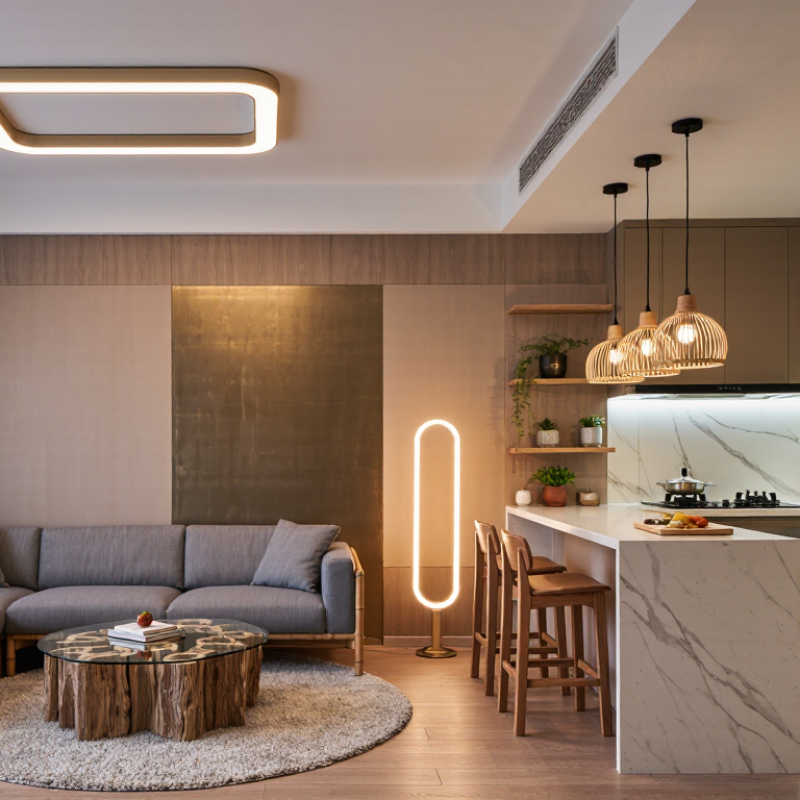
The strongest trend is layered lighting: ceiling fixtures, wall lights, and low-level accents working together. This creates softer rooms and reduces dependence on one harsh overhead source.

Warm adjustable white light will remain important, especially in bedrooms and hospitality-inspired living spaces. It feels calm. Yet preferences differ across regions, so fixed color temperatures can limit adoption.

Energy efficiency will shape purchasing decisions more visibly. Buyers are asking about luminous efficacy, heat management, driver quality, and replacement options.

Smart control is also becoming more practical, with dimming, occupancy sensing, and scene settings linked to real household routines. A hallway light that fades at night can improve comfort without flooding nearby rooms.

However, connectivity is not automatically useful. Complex apps, unstable networks, and poor privacy documentation can damage trust.

Simple controls still matter.

Material choices will add another layer to 2026 designs.

Recycled metal, repairable components, textured glass, and natural finishes can support longer product life. For international buyers, documentation deserves equal attention.

Confirm electrical ratings, testing records, installation instructions, packaging protection, and regional compliance before ordering.

Small details prevent expensive delays. I have seen attractive samples fail during inspection because cable labels were unclear or finishes varied between batches.

Forecasts can be wrong. A balanced specification should leave room for local habits, maintenance skills, and honest feedback after installation.

Exploring Smart and Connected Lighting Innovations

2026 Top Home Lighting Trends for Global Buyers

Smart and connected lighting is moving beyond simple app control. Grand View Research valued the global smart lighting market at USD 15.05 billion in 2023. It forecasts a 20.8% compound annual growth rate from 2024 to 2030. Voice control, occupancy sensors, and adaptive brightness now shape buyer expectations. A hallway light can brighten at 6:30 p.m., then soften near bedtime. Useful, but sometimes excessive. Many households still need dependable manual switches.

Energy performance remains practical, not decorative. The U.S. Department of Energy reports that LED lighting uses at least 75% less energy than incandescent lighting. It also lasts up to 25 times longer. Connected controls can reduce wasted illumination in empty rooms. However, poor setup can create delays, confusing scenes, or unwanted notifications. Buyers should test wireless stability, local control, data protection, and compatibility with regional electrical systems. Global projects need careful voltage and certification checks.

Tips: Choose lighting with clear offline controls and adjustable color temperature. Install sensors in entryways, kitchens, and storage areas first. Ask for documented security updates. Do not automate every bulb. A quiet, reliable lamp may outperform a clever one. Test one room before upgrading the whole home.

2026 Top Home Lighting Trends for Global Buyers

Energy efficiency remains the foundation of smart and connected home lighting. Lower-wattage LED products provide more flexibility for dimming, scheduling, occupancy sensing, and remote control.

Representative power required to produce approximately 800 lumens for 1,000 hours: incandescent 60W, halogen 43W, compact fluorescent 14W, and LED 10W. Values are based on U.S. Department of Energy and ENERGY STAR lighting equivalency guidance.

Examining Sustainable Materials and Energy-Efficient Designs

For global home-lighting buyers, sustainability is moving beyond efficient bulbs. The International Energy Agency’s Energy Efficiency 2023 report estimates that lighting uses about 15% of global electricity. LED technology can reduce this demand sharply. The U.S. Department of Energy reports that LEDs use at least 75% less energy and can last up to 25 times longer than incandescent lamps. That changes the design brief: fixtures should support replaceable components, precise dimming, and warm light around 2700–3000K.

Materials matter too. Recycled aluminum, responsibly sourced timber, recycled glass, and bio-based composites are gaining attention. Yet “natural” does not automatically mean sustainable. A heavy fixture shipped across continents may create more emissions than a simpler local product. The 2024 UNEP Global Status Report for Buildings and Construction states that buildings consume about 32% of global energy and generate roughly 34% of global carbon emissions. Lighting is only one part, but small choices scale across millions of homes.

Look for environmental product declarations, recycled-content details, and clear end-of-life instructions. Avoid vague claims such as “eco-friendly” without evidence. A useful fixture should be repairable, not merely recyclable. This remains imperfect. Some efficient lamps still use difficult-to-separate electronics, while low-cost sustainable materials may age poorly. Global buyers should compare lifetime energy, material sourcing, packaging, and maintenance—not only the purchase price.

Comparing Lighting Styles for Different Interior Spaces

2026 Top Home Lighting Trends for Global Buyers

Comparing Lighting Styles for Different Interior Spaces

In 2026, global buyers are comparing lighting by room function, not appearance alone. A warm, dimmable pendant can soften a dining room, while concealed wall lighting keeps faces clear during conversation. Living rooms benefit from layered lighting: ceiling glow, an adjustable reading lamp, and low-level accent light. This approach supports quiet reading, entertaining, and evening relaxation. Too many fixtures, however, can make the room feel restless. Less can be better.

Kitchens need bright, even light with strong color rendering for accurate food preparation. Under-cabinet strips help reduce shadows on worktops. Bedrooms usually suit warmer tones, around 2700K to 3000K, with shielded bedside fixtures to prevent glare. Bathrooms require careful moisture protection and clear mirror lighting from both sides. Home offices need focused, low-glare illumination that does not reflect across a screen. In compact apartments, ceiling lights with adjustable heads can serve several zones without crowding the room.

Global purchasers should confirm voltage, frequency, fitting size, and local safety certifications before ordering. Energy labels and installation rules vary by region. Smart controls offer convenience, but complicated apps can frustrate users. A reliable wall switch still matters. I also question whether every room needs tunable white lighting; sometimes, a simple warm setting feels more natural and lasts longer in daily use.

Evaluating Global Buyer Needs and Market Considerations

2026 Top Home Lighting Trends for Global Buyers

Global buyers are looking beyond appearance when selecting home lighting for 2026. They want efficient products, stable performance, and clear technical documentation. Warm white lighting remains popular for bedrooms and living rooms, while adjustable color temperatures suit changing daily routines. Buyers also examine voltage ranges, dimming methods, socket types, and smart-home compatibility before placing larger orders.

Market requirements vary sharply by region. A fixture suitable for one country may fail another market’s safety or installation expectations. Importers should verify testing reports, materials, wiring instructions, and certification records with qualified suppliers.

I have found that detailed product drawings prevent more disputes than attractive catalog images. Packaging also matters. Reinforced cartons, moisture protection, and replaceable components can reduce damage during long-distance shipping.

Cost remains important, but the lowest unit price can create hidden expenses. Energy use, warranty handling, spare parts, and delayed deliveries affect the final margin.

One assumption I once made was that modern design would sell everywhere. It did not. Local room sizes, ceiling heights, climate, and cultural preferences changed buyer responses. Some customers preferred simple wall lights over connected systems because installation support was limited. That feedback deserves attention. Product forecasts can be useful, but real purchase data should challenge them.