2026 Best LED Lighting Solutions for Global Buyers?
In 2026, global buyers will judge lighting beyond brightness and purchase price. They will examine energy use, controls, lifespan, certification, and after-sales support. The International Energy Agency reports that lighting still represents roughly 15% of global electricity consumption. This keeps efficient upgrades commercially important, especially in warehouses, hotels, offices, roads, and retail spaces.
The U.S. Department of Energy states that LED products can use at least 75% less energy than incandescent lamps and last up to 25 times longer. However, real savings depend on installation quality, operating hours, heat management, and control settings. A poorly designed fixture can create glare, uneven illumination, or expensive maintenance. That detail is easy to overlook.
This guide evaluates Led Lighting Solutions for international procurement teams using practical and verifiable criteria. These include lumen output, efficacy, color rendering, ingress protection, driver reliability, dimming compatibility, warranty terms, and local compliance requirements. The 2024 Global Status Report for Buildings and Construction also highlights the buildings sector’s significant energy and emissions impact, strengthening the case for efficient lighting systems.
There is no universal “best” product. A cold-storage facility needs different performance from a boutique hotel. A coastal project may require stronger corrosion protection. Buyers should compare measured performance, not attractive catalog images. Product datasheets can be incomplete. Independent testing remains valuable.
The sections ahead connect current market evidence with field-oriented purchasing decisions. They also consider lifecycle cost, smart controls, circularity, and supplier credibility. Good lighting is visible immediately. Good procurement is noticed later.
2026 LED Market Outlook: 75% Energy Savings vs. Incandescent Lighting
Global buyers are entering 2026 with a clear lighting priority: lower energy use without sacrificing visibility. LED lighting can reduce electricity consumption by up to 75% compared with incandescent lamps, depending on wattage, operating hours, and product quality. A 60-watt incandescent lamp replaced by a 15-watt LED provides a simple example. After 1,000 operating hours, the incandescent uses 60 kilowatt-hours, while the LED uses 15 kilowatt-hours.
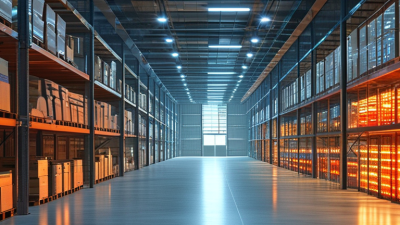
The savings become more visible in warehouses, hotels, offices, and retail spaces that operate for long hours. Buyers should compare lumens, not watts alone. A reliable LED solution should provide stable brightness, suitable color temperature, acceptable color rendering, and effective heat control. Dimming compatibility also matters. Poor thermal design can reduce performance and shorten service life.
The headline figure needs careful examination. Not every installation reaches 75% savings. Some replacements use higher wattage, while inefficient controls or unnecessary operating hours reduce the benefit. Initial purchase costs may also appear higher. However, lower electricity consumption and fewer replacements can improve total ownership costs over time. Procurement teams should request test data, warranty terms, local compliance documents, and realistic performance estimates. Small details matter. A brighter lamp is not always a better lamp.
2026 LED Lighting Outlook: 75% Energy Savings vs. Incandescent Lighting
For a comparable general-purpose lighting application, a 15 W LED lamp can replace a 60 W incandescent lamp, reducing electricity consumption by approximately 75%. The comparison assumes 1,000 operating hours per year.
LED Performance Metrics: 130–210 lm/W Efficacy and 50,000-Hour Life
For global buyers, LED performance begins with measurable output, not impressive packaging. High-quality systems can reach 130–210 lm/W, but efficacy depends on wattage, color temperature, optics, and operating conditions. Ask for test data at the complete fixture level. Chip-only figures may look stronger than real installation results.
A 50,000-hour life rating also needs careful reading. It usually describes expected lumen maintenance, not guaranteed failure-free operation. Confirm the L-value, ambient temperature, driver quality, and thermal design. In warm warehouses, poor heat dissipation can reduce output faster than laboratory figures suggest. Field evaluations often reveal dust buildup, voltage variation, and blocked ventilation. These details are easy to miss. They matter.
Tips:
Request LM-80 and TM-21 documentation where available, plus independent photometric reports. Compare delivered lumens per watt, not nominal wattage. Check whether the warranty covers the driver and housing. Ask for maintenance records from similar environments. A 210 lm/W claim may be unsuitable for a high-CRI retail space, where color quality can reduce efficacy. Buyers should also test a sample under real mounting height and temperature. I would not approve a large order from a datasheet alone. Performance claims need context, and context is sometimes incomplete.
Global Compliance Standards: IEC, CE, RoHS, UL, DLC, and LM-80 Testing
Global LED buyers should treat compliance as a performance filter, not a paperwork exercise.
The International Energy Agency reports that lighting consumes about 15% of global electricity. Efficiency claims therefore require evidence.
IEC standards help verify electrical and photobiological safety. CE marking supports conformity within the European market.
RoHS limits restricted substances in electrical products. These checks matter when fixtures enter warehouses, offices, and public facilities.
North American projects often request UL safety compliance and DLC qualification for energy-efficiency programs.
DLC technical requirements examine efficacy, color quality, dimming, and controllability. LM-80 testing measures LED package lumen maintenance over time.
It does not directly prove a complete fixture’s lifetime. The U.S. Department of Energy’s 2023 Solid-State Lighting R&D Opportunities report recorded laboratory LED efficacies above 200 lumens per watt, while commercial products usually achieve less.
That gap deserves careful review.
Experienced buyers should request test reports, sample identification, test temperatures, driver details, and photometric files.
A CE logo alone is not enough. Neither is a promising lifetime claim. Real installation records can reveal failures that laboratory data misses.
I have seen specifications pass quickly, then struggle under heat, dust, or unstable voltage. That is an uncomfortable but useful reminder.
Compliance should be checked against the exact model, revision, and production batch. Supplier declarations can change. Test evidence can age.
Application Selection: IP65 Outdoor, UGR<19 Offices, and CRI≥90 Retail
For global buyers, LED lighting selection should begin with the application, not the fixture appearance. Outdoor projects need IP65 protection against dust and water jets, but IP65 does not permit underwater installation. Check cable glands, housing seals, drainage paths, and UV resistance. A coastal walkway may also need corrosion-resistant materials and stronger thermal management. Small installation details often decide long-term reliability.
Office lighting requires more than a low-glare label. Choose products designed to achieve UGR<19 under the actual room layout, ceiling height, spacing, and surface reflectance. Review photometric files and perform a lighting calculation before ordering. Diffusers, shielding, and beam angles affect screen comfort. In practice, even a compliant luminaire can cause glare when installed too close to monitors or bright windows. I have seen this mistake repeated.
Retail environments depend on accurate color presentation. Select CRI≥90 lighting, then examine R9 performance for red products, skin tones, and warm materials. Match color temperature with the merchandise and store atmosphere. Consistency between fixtures matters as much as the headline specification. Request test reports, color-tolerance data, operating-temperature limits, and maintenance guidance. Site measurements after installation are valuable, although budgets often remove this step. That omission deserves reconsideration.
Buyer Evaluation: Total Cost, Warranty, Lumen Maintenance, and ROI Data
For global buyers, the best LED solution is not the cheapest fixture. It is the option with transparent lifetime costs, verified performance, and usable warranty terms. The U.S. Department of Energy reports that LED lighting can use up to 75% less energy and last up to 25 times longer than incandescent lighting. However, real savings depend on controls, operating hours, heat, and installation quality.
Start with total cost of ownership. Include purchase price, shipping, installation, controls, electricity, cleaning, replacements, and disposal.
For example, replacing a 100-watt fixture with a 50-watt LED operating 4,000 hours yearly saves about 200 kWh.
At 0.12 dollars per kWh, that equals 24 dollars in annual energy savings per fixture. The calculation is simple, but electricity tariffs vary sharply between countries. A spreadsheet can still lie.
Warranty review needs more than a five-year headline.
Request coverage for the driver, housing, optics, labor, and shipping. Ask whether the warranty applies at the project’s ambient temperature and operating cycle.
Lumen maintenance should reference LM-80 testing and TM-21 projections, not only “50,000 hours.” The DesignLights Consortium’s technical requirements also emphasize reported efficacy and tested performance.
A practical ROI model should compare delivered lumens, not nominal watts.
DOE solid-state lighting reports show continuing efficacy gains, yet poor thermal design can reduce field performance. Buyers should request sample data, installation references, and replacement procedures before approving volume orders.